Upcoming Event: Babuška Forum
Toward Predictive Cardiovascular Simulations: Models, Numerical Methods, Surrogates, and Uncertainty
Richard Schussnig, Oden Institute
9:30 – 10:30AM
Friday Oct 9, 2026
Abstract
Patient-specific cardiovascular flow simulations bring together challenges in anatomical reconstruction, numerical approximation, computational efficiency, and physical modeling. This talk presents an overview of our work addressing these challenges, from constructing higher-order hexahedral meshes from CT images to solving incompressible flow problems on parallel computing systems. I will discuss higher-order discontinuous Galerkin discretizations, matrix-free methods, and consistent splitting solvers for the Navier–Stokes equations, alongside modeling aspects particular to vascular flows, including physiological boundary conditions, non-Newtonian blood rheology, and interaction with compliant vessel walls. Examples from aortic flow and patient-specific aortic dissection will illustrate how geometry, constitutive assumptions, and numerical methods influence predicted hemodynamics. Building on these simulations, I will discuss surrogate modeling and uncertainty quantification as tools for accelerating predictions and assessing their reliability under uncertain anatomical and physiological inputs. Together, these approaches provide a foundation for future clinical workflows that combine computational efficiency with quantified uncertainty, with the aim of predicting disease progression, informing virtual cohorts, and supporting clinicians in treatment planning.
Biography
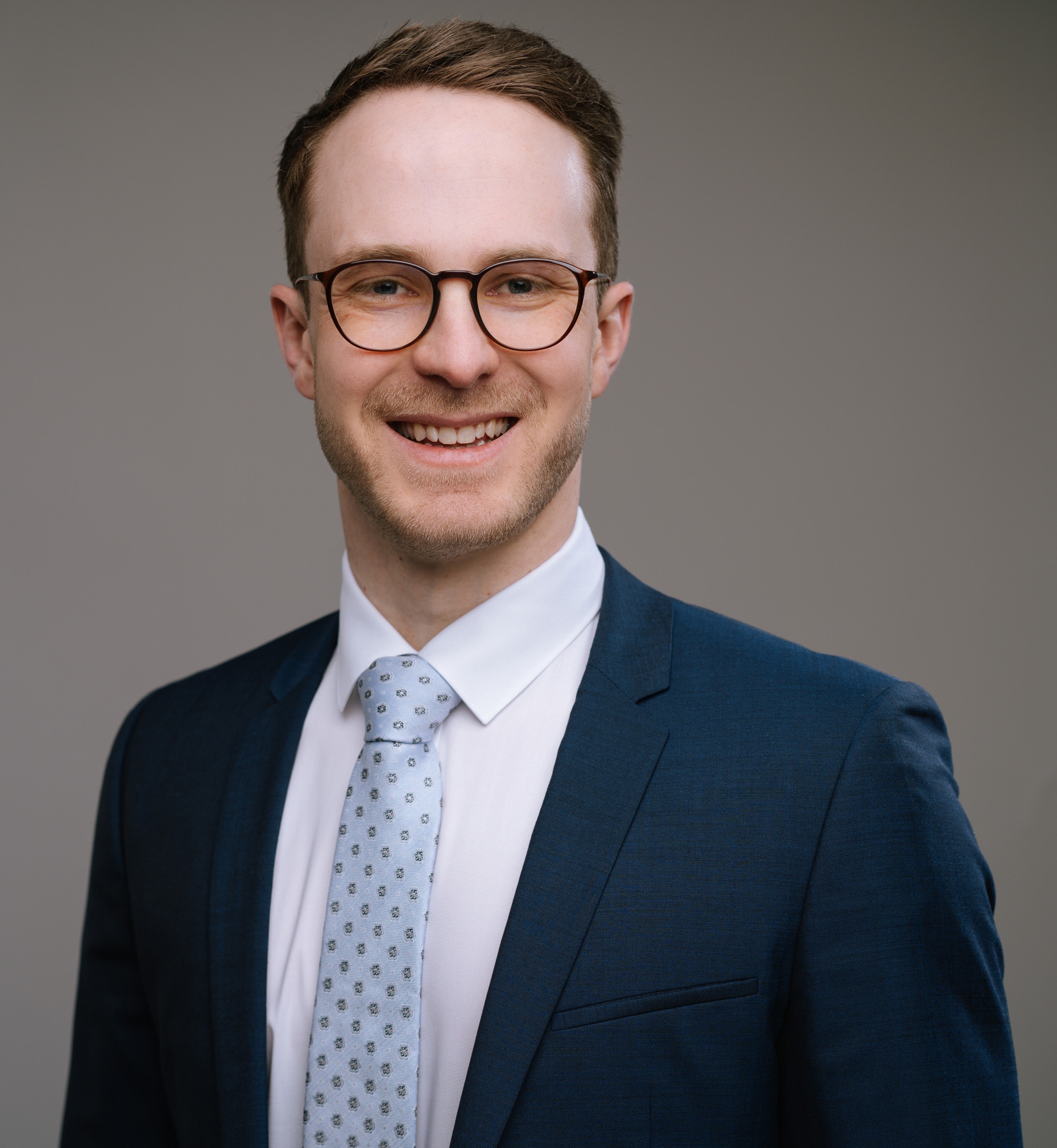
Richard Schussnig is a Marie Skłodowska-Curie Postdoctoral Fellow in the Willcox Research Group at the Oden Institute for Computational Engineering and Sciences, University of Texas at Austin, and is affiliated with the Institute of Biomechanics at TU Graz. His research combines cardiovascular biomechanics, numerical methods, and high-performance computing to develop efficient and reliable patient-specific simulations.
He studied civil engineering at TU Graz, where he completed his doctorate in 2022 within the interdisciplinary project “Mechanics, Modeling, and Simulation of Aortic Dissection,” led by Gerhard A. Holzapfel. His doctoral research focused on numerical methods for non-Newtonian blood flow and cardiovascular fluid–structure interaction. He subsequently joined Martin Kronbichler’s group at the University of Augsburg and Ruhr University Bochum, developing higher-order finite element methods and matrix-free solvers for computational mechanics. During this period, he also contributed to the EuroHPC project “dealii-X: an Exascale Framework for Digital Twins of the Human Body.”
His current fellowship project, VascularROM, brings together model order reduction, surrogate modeling, uncertainty quantification, and high-performance cardiovascular simulation. Working with Karen Willcox, Thomas J. R. Hughes, Charles A. Taylor, and Gerhard A. Holzapfel, he aims to advance computational tools that can support future clinical workflows for predicting disease progression and treatment planning for individual patients or virtual cohorts.
Event information
Friday Oct 9, 2026